
Introduction
Virtual Reality (VR) is revolutionizing the world of architecture. It is no longer just a technology option, but a necessity for improving design, communication and presentation. With VR, architects can visualize, test and present designs in a realistic environment, reducing costs, errors and development time.
In this article we explore a comprehensive list of VR benefits for architectural firms, explaining how this technology can take your firm to the next level.
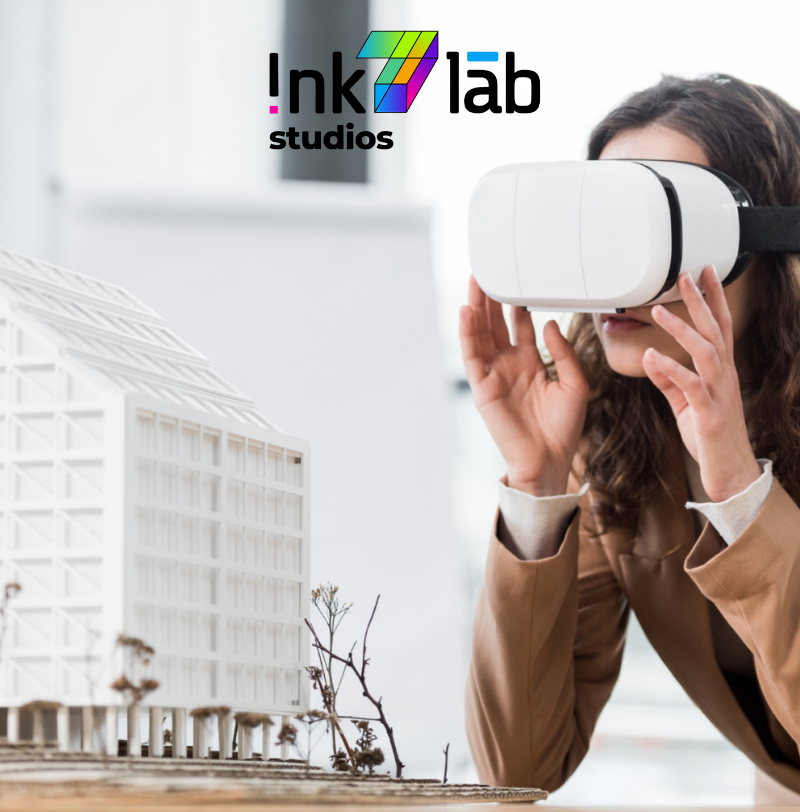
What Does It Mean to Use Virtual Reality in Architecture?
Virtual Reality makes it possible to fully immerse oneself in projects. With the use of VR viewers, it is possible to explore every nook and cranny of a building at the design stage, understanding spaces, materials and functionality like never before.
This technology overcomes the limitations of traditional drawings and 3D representations, providing an engaging and precise method to improve design and meet customer needs.
Competitive Benefits of Virtual Reality for Architects
Realistic and immersive visualization 1.
It allows you to explore the project in full scale, perceiving proportions, spaces and details.
Innovative presentations 2.
Turn static slides into exciting experiences that wow customers.
3. Quick decisions thanks to immediate feedback 3.
Clients can explore the project virtually and suggest changes in real time.
Elimination of design errors 4.
VR simulation helps identify critical issues before construction, reducing costs and delays.
5. time saving
Speeding up the approval and review stages simplifies decision-making processes.
6. seamless integration with BIM
Combines informative 3D models with VR experiences to analyze materials, lighting and spaces.
7. better communication with teams
Facilitates the sharing of complex ideas among architects, engineers, and clients.
Customer involvement 8.
Making the project live realistically strengthens trust and reduces misunderstandings.
Support for creativity 9.
Explore innovative design ideas without limits by experimenting with alternative solutions.
Review optimization 10.
VR visualization speeds up design iterations, saving valuable time.
Improved perception of proportion and volume 11.
It overcomes the limitations of traditional drawings for intuitive understanding of spaces.
12. Reducing construction costs
Detects errors before implementation, limiting waste and additional costs.
Simulation of materials and lighting 13.
Test the effect of textures, finishes and light sources in real time.
14. better marketing and sales
Immersive experiences attract customers and facilitate the sale of projects not yet built.
Effective remote collaboration 15.
Distributed teams can work on the same project in a shared virtual space.
16. virtual prototyping
It eliminates the need for physical prototypes, reducing time and waste.
17. multisensory experience
The integration of sounds and details provides an extremely realistic preview of the final environment.
18. improving sustainability
It reduces the use of physical model materials, contributing to a more environmentally friendly approach.
19. competitive uniqueness
Differentiate your practice by positioning it as innovative and technologically advanced.
Facilitation of real estate sale 20.
Offer realistic virtual tours to promote projects and convince potential buyers.
21. Internal learning and training
VR is a great tool for training teams and presenting complex scenarios.
22. space behavior evaluation
It simulates the actual use of environments to verify their functionality and comfort.
Reducing approval time 23.
Clarity of visualization facilitates customer approval.
Accessibility to non-experts 24.
Clients without technical knowledge easily understand the project through VR.
Efficiency in complex projects 25.
Ideal for managing buildings with many technical details and articulated structures.
How to Implement VR in Your Studio?
Choose the right VR software compatible with your design tools.
It integrates BIM models with immersive VR environments.
Train your team in the use of VR viewers and platforms.
Promote your innovation to attract clients and enhance your practice.
Conclusion
Virtual Reality represents a momentous change for the architecture industry. With VR, you can offer your clients immersive experiences, reduce costs and time, and stand out as a cutting-edge firm.
Want to bring innovation to your studio? Discover how VR can revolutionize your approach to design.
 Italian
  English
  Spanish
  Catalan
  French
  Croatian
  German